


Updated March 2026 | Houston, Texas
Why is proactive commercial roof maintenance so critical for Houston businesses?
Houston’s combination of extreme heat, high humidity, and hurricane-force winds creates one of the harshest environments for commercial roofing systems in the country. A consistent maintenance plan can extend your roof’s lifespan by up to 50%, while neglected minor issues can escalate to repairs costing 3 to 5 times more than prevention. Semi-annual inspections, reflective coatings, and early repairs are the foundation of protecting your building investment.
Houston’s climate is as tough on roofs as it is unpredictable. Between the scorching summer heat, heavy humidity, and the occasional hurricane, commercial roofs take a real beating. For property managers and business owners, overlooking roof maintenance can mean leaks, energy loss, and expensive downtime that disrupts operations.
In this guide, we’ll break down why proactive commercial roof care matters so much in Houston. You’ll learn key maintenance strategies, early warning signs of roof damage, and when to call for professional commercial roof repair in Houston to extend both your building’s lifespan—and your peace of mind. Whether you manage a warehouse, office complex, or retail center, these strategies apply across every commercial roofing system in the Greater Houston area.
Key Concepts in Commercial Roof Maintenance
TPO Roofing
Thermoplastic Polyolefin — a reflective, energy-efficient single-ply membrane that dominates Houston’s commercial market for heat resistance and durability.
Reflective Roof Coatings
Cool roof coatings that reduce UV damage and can lower roof surface temperatures by up to 60°F, extending lifespan and cutting energy costs.
Infrared Roof Inspection
Non-destructive testing using thermal imaging to detect hidden moisture trapped beneath roofing membranes before visible damage appears.
GICs (Geomagnetically Induced Currents)
The NRCA recommends semi-annual inspections to extend commercial roof life by 30% to 100% through preventive care.
Why Commercial Roof Maintenance Matters in Houston
Maintaining a commercial roof isn’t just about stopping leaks—it’s about protecting your investment, maintaining energy efficiency, and keeping business operations running smoothly. In Houston, the weather makes this even more critical than in most markets. According to NOAA, Houston averages more than 90 days above 90°F annually, and the Gulf Coast location subjects every building to hurricane-season winds that can exceed 130 mph.
Houston’s Harsh Weather Conditions
Think of Houston’s weather as a constant stress test for your roof. Extreme heat and UV exposure can dry out membranes, cause thermal expansion cracks, and accelerate the aging of sealants and adhesives. Hurricanes and high winds from tropical systems can bring 130+ mph gusts that lift seams, puncture membranes, or strip entire sections of roofing. And persistent high humidity seeps into roof layers, trapping water between membranes and promoting mold growth, insulation degradation, and structural rot that can remain hidden for months.
“Preventive roof maintenance is your first line of defense against Houston’s unpredictable weather patterns.”
— Robert Delgado, Commercial Roofing Engineer, Houston Roof Systems Inc.
The Cost of Neglecting Maintenance
Postponing maintenance often ends up costing far more than staying ahead of it. Minor issues can become major repairs—sometimes 3 to 5 times more expensive if ignored. Water infiltration can ruin insulation, damage electrical systems, or even cause safety code violations that shut down operations. For every $1 spent on preventive maintenance, building owners save approximately $4 in emergency repairs, according to industry data. Routine maintenance not only saves money but also prevents disruptions, preserves warranty coverage, and eliminates liability issues before they arise.
80%
Of commercial roofs are replaced prematurely due to inadequate maintenance, according to the National Roofing Contractors Association—meaning most businesses pay for full replacements that could have been avoided with routine care.
Common Commercial Roofing Systems Used in Houston
Houston’s commercial buildings use a mix of roofing types based on cost, durability, and architectural design. Knowing your roof type helps you tailor your maintenance approach and understand what roofing materials perform best in the Houston climate.
According to the National Roofing Contractors Association, TPO and metal roofs dominate Houston’s commercial market thanks to their exceptional heat reflectivity and hurricane resilience. For facilities looking to retrofit aging roofs without full replacement, energy-efficient roofing options like SPF topped with elastomeric coatings can deliver up to a 28% drop in cooling costs while adding decades of service life.
6 Warning Signs You Need Commercial Roof Repair in Houston
Even the strongest roofs show wear in Houston’s demanding climate. As a property manager responsible for a multi-tenant building, or as a warehouse operator keeping inventory safe, catching these signs early prevents costly repairs later.
Pooling Water
Standing water after 48 hours indicates drainage problems that weaken membranes and promote mold growth.
Membrane Punctures
Foot traffic, dropped tools, or storm debris can pierce single-ply membranes, allowing moisture into the insulation layer.
Blisters or Bubbles
Trapped air or moisture between roof layers creates visible blisters that will eventually crack and leak.
Interior Stains & Leaks
Water stains on ceiling tiles or walls signal that water damage has already penetrated your building envelope.
Rising Energy Bills
A sudden increase in HVAC costs often points to compromised insulation or a reflective coating that has deteriorated.
Damaged Flashing
Cracked or separated flashing around vents, skylights, and parapet walls is one of the most common entry points for leaks.
If more than 20% of your roof shows damage, it’s time to call a professional for a full inspection or to discuss whether repair or replacement makes more financial sense for your situation.
5 Preventive Maintenance Strategies for Houston Commercial Roofs
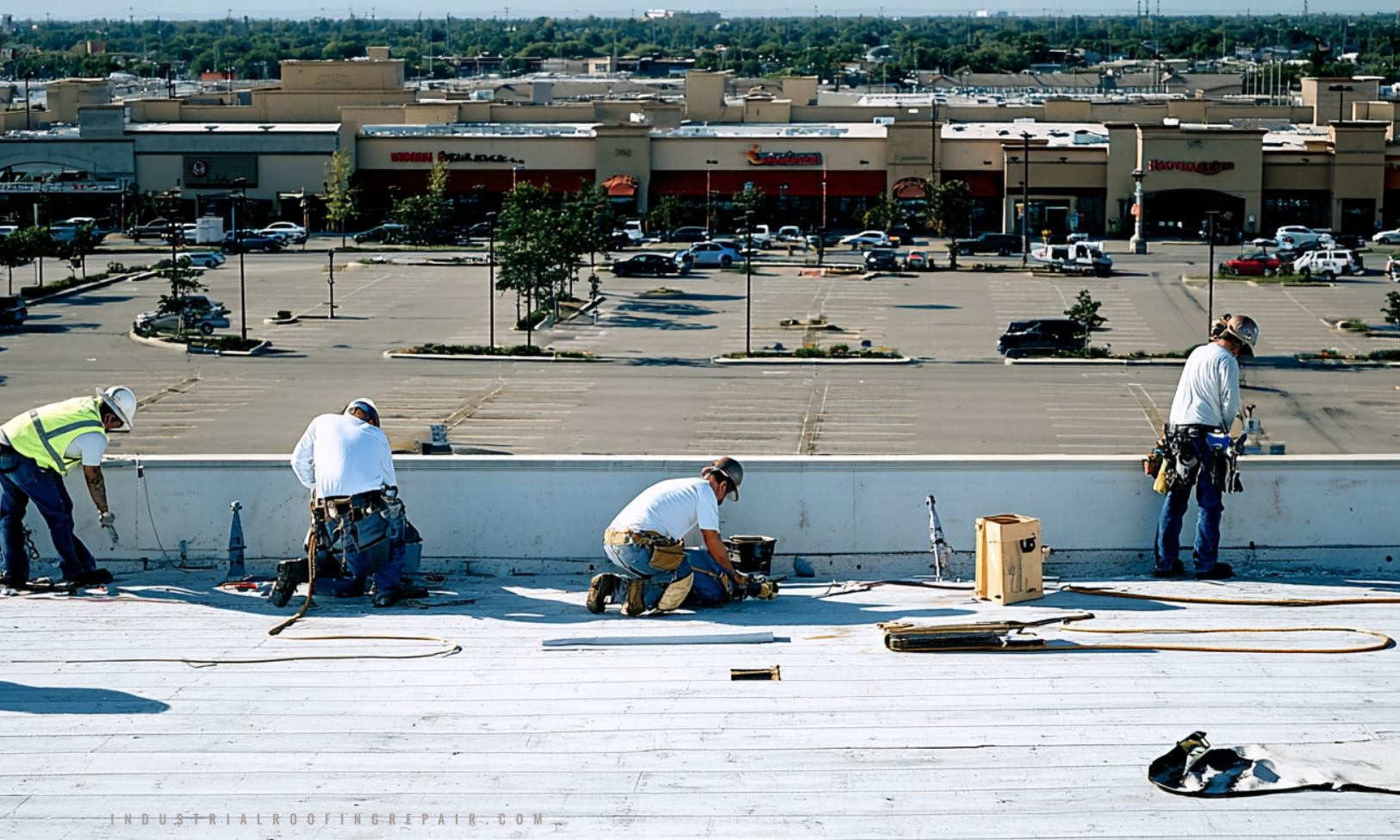
A consistent maintenance plan can extend your roof’s life by up to 50%, according to industry data. Here’s how to protect your investment year-round in Houston’s demanding climate:
1. Schedule Regular Roof Inspections
Have your roof inspected at least twice a year—spring and fall—and after every major storm event. Professional inspectors use infrared scanning, core sampling, and detailed photo documentation to identify problems invisible to the naked eye. Keep all inspection reports organized for insurance claims and warranty compliance.
2. Keep Roofs Clean and Debris-Free
Storm debris, leaves, and organic matter can block drains and trap water on your roof surface. Clear branches after storms, clean gutters quarterly, and consider installing walkway pads in high-traffic areas to prevent membrane punctures from foot traffic and equipment servicing.
3. Seal and Repair Minor Issues Early
Small cracks or seam gaps can become active leaks in a matter of days in Houston’s humidity. Use manufacturer-compatible sealants, inspect flashing around every penetration, and address any blister or puncture the same week it’s discovered. A $500 repair today can prevent a $15,000 problem six months from now.
4. Maintain HVAC and Roof Equipment
HVAC units, exhaust fans, and other rooftop equipment are some of the biggest sources of roof damage contractors encounter. Check mounting supports for stability, ensure no oil or condensate leaks onto roofing membranes, and require all service technicians to use protective walkway paths when accessing equipment.
5. Apply Reflective Roof Coatings
Cool roof coatings reduce UV damage and can drop roof surface temperatures by up to 60°F—saving substantial energy costs and extending membrane lifespan, according to the U.S. Department of Energy. Elastomeric coatings can lower cooling energy use by up to 25%, making them one of the highest-ROI investments for any Houston commercial property.
Author’s Pro Tip
Many Houston roofers offer bundled maintenance contracts that include inspections, cleanings, and small repairs—often saving 30% compared to on-demand services. Lock in a contract before hurricane season starts in June to ensure priority scheduling when storms hit.
Is Your Commercial Roof Ready for Hurricane Season?
Don’t wait for a leak to tell you there’s a problem. Schedule a professional inspection today and get a custom maintenance plan for your building.
The Role of Professional Roof Inspections in Extending Roof Life
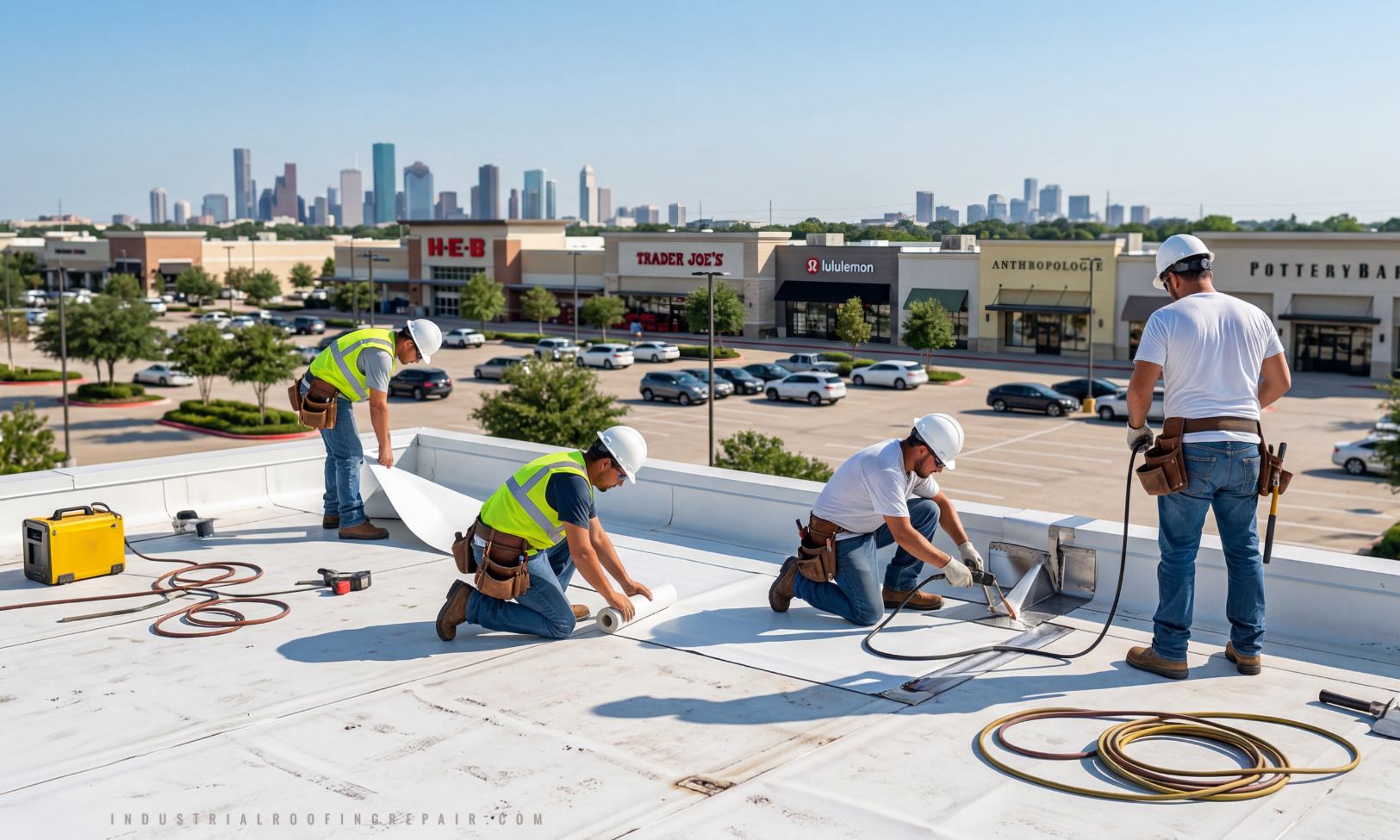

While DIY visual checks are valuable, professional inspectors catch what you can’t see. They use advanced tools including infrared thermal imaging, core sampling to assess membrane and insulation condition, electronic leak detection, and detailed photo reports that create a documented history of your roof’s health over time.
“A professional roof inspection every six months can double the life of a commercial roof.”
— Dr. Angela Moore, Building Envelope Specialist, Texas A&M University
Professional documentation also plays a critical role in warranty compliance. Most manufacturer warranties require proof of regular documented maintenance to remain valid. Skip inspections, and you could lose coverage before you even need to file a claim. A certified Houston roofing contractor will provide reports that satisfy both warranty requirements and insurance documentation standards.
Cost of Commercial Roof Repair in Houston (2025–2026)
Understanding repair costs helps you budget effectively and avoid being overcharged. Here are typical repair costs for Houston’s most common commercial roofing systems:
Case Study: How Preventive Roof Care Saved a Houston Warehouse $20,000
A Houston logistics warehouse adopted a semiannual inspection plan and applied reflective elastomeric coatings to their aging modified bitumen roof. In just two years, the results were dramatic: HVAC cooling costs dropped by 18%, the facility prevented an estimated $20,000 in potential water damage by catching two small membrane failures early, and the maintenance plan added approximately 10 years to the roof’s projected service life. A small, consistent investment in commercial roof repair in Houston made a significant difference—turning reactive emergency spending into controlled, predictable costs.
18%
Reduction in HVAC cooling costs achieved by a Houston warehouse after implementing a semiannual inspection plan and applying reflective roof coatings.
How to Choose the Right Commercial Roof Repair Contractor in Houston
Hiring the right roofing partner is just as important as maintaining the roof itself. Texas does not require a state roofing license, so the responsibility to verify a contractor’s legitimacy falls on you. Always verify general liability insurance and workers’ compensation coverage—any reputable contractor will share these documents without hesitation.
Check references, request project photos and detailed inspection reports, and compare long-term maintenance plans—not just one-time repair quotes. Look for manufacturer-backed certifications such as GAF Master Elite or CertainTeed SELECT ShingleMaster, which reflect top-tier training and unlock enhanced warranty coverage. As a business owner, choosing a reliable Houston roofing contractor with local expertise ensures that materials and timing are calibrated specifically for the Gulf Coast’s unique humidity, UV exposure, and storm cycles.
“Local expertise matters—Houston’s humidity and storm cycles require different materials and timing than most other regions.”
— Derrick Hines, Owner, Bay Area Commercial Roofing Services
Frequently Analyzed Topics
How often should commercial roofs be inspected in Houston?
At least twice a year—ideally in spring before storm season and in fall afterward—plus after any major weather event. Roofs older than 15 years should be inspected quarterly. The NRCA reports that consistent semi-annual inspections can extend roof service life by 30% to 100%.
What’s the average cost of commercial roof repair in Houston?
Typically between $4 and $12 per square foot, depending on the roofing material and severity of damage. TPO repairs average $5–$8/sq ft, modified bitumen $4–$7/sq ft, and metal roofing $7–$12/sq ft. Bundled maintenance contracts often reduce overall costs by 30% compared to on-demand service calls.
Are reflective roof coatings worth the investment?
Absolutely. Reflective coatings can reduce roof surface temperatures by up to 60°F, lower cooling costs by 20–28%, and extend roof life by 10–15 years without requiring a full replacement. They may also qualify for federal energy tax credits and local utility rebates through programs like CenterPoint Energy’s energy-efficiency initiatives.
Does insurance cover commercial roof repairs in Houston?
Most commercial property policies cover storm, hail, and wind damage, but not routine wear and tear or maintenance-related deterioration. Keeping detailed inspection records, photos, and professional reports significantly strengthens insurance claims. Always file claims promptly after storm events and work with your contractor to document damage before repairs begin.
When should I repair vs. replace my commercial roof?
If less than 25% of your roof shows damage and the structure is sound, targeted repairs are usually the most cost-effective option. If damage is widespread, repairs have become frequent, or the roof is past 75% of its expected lifespan, replacement often provides better long-term ROI. A professional assessment will help you make the right decision based on your specific conditions.
What roofing system is best for Houston’s climate?
TPO and metal (R-panel) roofs are the top performers in Houston due to their heat reflectivity, wind resistance, and durability. SPF roofing topped with elastomeric coatings is an excellent retrofit option for aging flat roofs, offering seamless insulation and up to 30% cooling cost reduction. The best choice depends on your building type, budget, and long-term maintenance strategy.
Protect Your Building—Before Houston’s Next Storm Season Hits
For Houston businesses, preventive roof care isn’t optional—it’s a smart, long-term investment in safety, efficiency, and operational continuity. Regular inspections, prompt repairs, reflective coatings, and professional partnerships help your commercial roof stand up to Houston’s intense weather while minimizing downtime and costs.
The data is clear: proactive commercial roof repair in Houston costs a fraction of reactive emergency spending. With 80% of commercial roofs replaced prematurely due to neglected maintenance, the businesses that invest in routine care are the ones that avoid six-figure replacement bills and keep operations running uninterrupted through every Houston storm season.
Protect Your Investment — Schedule a Commercial Roof Inspection Today
Partner with Houston’s trusted commercial roofing experts to create a custom maintenance plan that fits your building and budget.
✔Free professional roof assessment with detailed photo report
✔Custom maintenance plans that save 30% vs. on-demand repairs
✔19+ years of Houston commercial roofing experience