

industrialroofingrepair@gmail.com

713-280-9604

Houston, TX · Flat & Low-Slope Roofing

TPO & Torch Down Rolled Roofing in Houston: Built for Gulf Coast Flat Roofs

Houston's warm climate, intense sunlight, and heavy rain demand flat-roof systems that can perform under pressure — and the two workhorses that consistently deliver are TPO and Torch Down.

TPO (Thermoplastic Olefin) and Torch Down (modified bitumen) rolled roofing are the two most-installed flat-roof systems on Houston commercial and industrial buildings. Each has clear strengths, distinct best-fit applications, and a different cost profile. Industrial Roofing & Repair installs both — and tells you straight which one fits your building, your budget, and your local code requirements.

  • Heat-welded TPO seams & certified torch-down crews
  • Houston code-compliant installation, every job
Request a Free Quote →
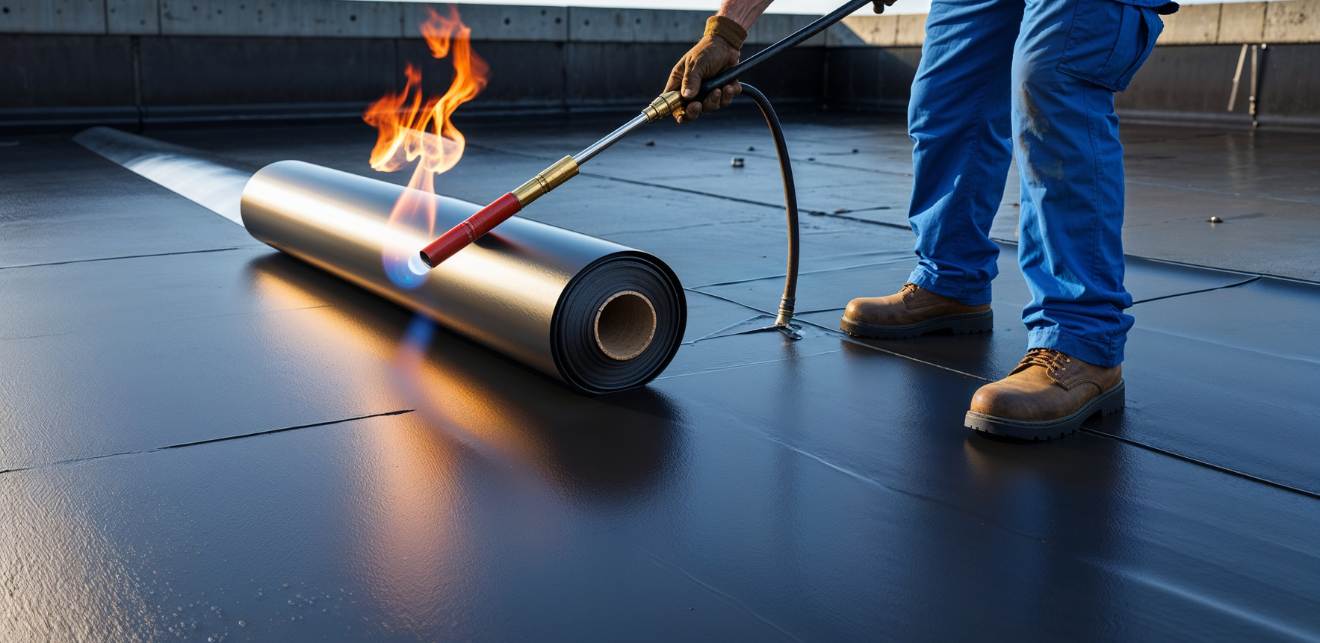
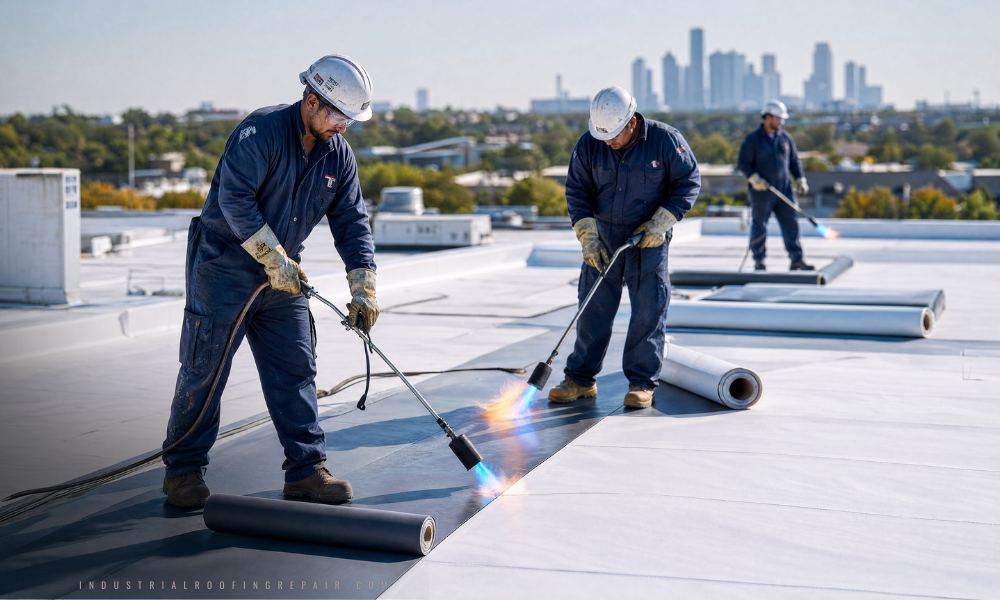
TPO and torch down rolled roofing installation in Sugar Land, TX
TPO flat roof repair on a Houston commercial property

The Decision

Choosing the right flat roof for your Houston building

Flat and low-slope roofing is the standard for Houston commercial, industrial, multifamily, and many retail buildings. But "flat roof" isn't a single product — it's a category that covers dramatically different systems, each with its own performance profile, cost structure, and installation method.

The two systems that dominate the Houston market are TPO and Torch Down (modified bitumen). Both routinely deliver 15–25 year service lives. Both handle Gulf Coast weather. But they're not interchangeable: TPO is the lighter, more energy-efficient, white-membrane option for new construction and energy-conscious owners. Torch Down is the tougher, foot-traffic-rated, multi-layer asphalt system for industrial buildings, restaurants with rooftop equipment, and structures where durability beats reflectivity.

The right choice depends on four things: how you use the roof, what your cooling costs look like, your local code requirements, and your maintenance horizon. Below, we walk through both — head-to-head.

Decision Criteria

What matters when choosing a Houston flat roof

Before picking a system, line up your building against these four criteria. The right answer depends on which ones matter most for your situation.

Energy Efficiency

Reflective white TPO can cut cooling demand by up to 30% (DOE). If summer cooling is a major operational cost, that's a real line-item impact — and a key factor in choosing between systems.

Drainage & Ponding

Houston gets 50+ inches of rain a year. If your roof has flat areas where water sits for 48+ hours, that affects both system choice and warranty coverage. Slope matters more than material.

Wind & Hurricane Resistance

Both systems can be installed to high wind-uplift specs, but the fastening pattern, edge metal, and seam strength matter. Houston code increasingly mandates hurricane-rated assemblies.

Lifespan & Maintenance

Both deliver 15–25 years with care. The difference is what maintenance looks like along the way — TPO is recoatable, Torch Down handles foot traffic better. Match the system to your usage.

Flat roofing, by the Gulf Coast numbers

20+ Years installing Houston flat roofs
15–25yr Typical service life
30% Cooling savings with TPO (DOE)
50" Annual Houston rainfall handled

Side-by-Side

TPO vs Torch Down: which system fits your building?

Both are excellent flat-roof systems with strong Houston track records. Here's how they stack up across cost, performance, application, and best-fit scenarios.

Thermoplastic Olefin

TPO

Single-ply reflective white membrane. Mechanically fastened or fully adhered. Heat-welded seams. The dominant new flat-roof system in Houston commercial construction.

Pros
  • Highly reflective — cuts cooling demand
  • Heat-welded seams (strongest seam type available)
  • Lightweight — minimal structural load
  • No open flame during installation
  • Energy Star & cool-roof rated options
Cons
  • Newer technology — shorter real-world track record
  • Seam quality depends on welder skill
  • Membrane can be punctured by sharp impact
Best For New commercial construction, retail buildings, office complexes, multifamily, and anywhere cooling cost is a major operating expense.
Modified Bitumen

Torch Down

Multi-layer asphalt-based system applied with controlled propane torch. SBS or APP modifiers bond layers into a tough, monolithic, fully redundant membrane. Time-tested for decades.

Pros
  • Highly durable — handles foot traffic & equipment
  • Multi-layer redundancy (no single point of failure)
  • Proven track record (40+ years of field data)
  • Excellent for buildings with rooftop HVAC
  • Self-sealing under heat & pressure
Cons
  • Open-flame installation (fire-safety protocols required)
  • Dark surface absorbs heat (less energy efficient)
  • Heavier load on building structure
Best For Industrial buildings, warehouses, restaurants and commercial kitchens, structures with rooftop foot traffic, and any roof with complex penetrations or equipment.

Not sure which system fits your building?

Free on-site assessment with a written recommendation — TPO, Torch Down, or both.

Request a Free Quote →

Credentials

Certified in both systems, code-compliant on every job

Installing TPO and Torch Down requires different certifications, different equipment, and different safety protocols. We carry both — which means when you ask which system is right for your building, you get a vendor-neutral answer instead of being pushed toward whatever we happen to install.

  • Licensed & insured contractors
  • TPO heat-weld certified installers
  • Torch-down fire-safety protocols
  • Houston code-compliant installation
  • Manufacturer-backed material warranties
  • Workmanship warranty on every install

FAQs

TPO and Torch Down roofing, answered

What Houston property owners and facility managers most often ask before committing to a flat-roof system.

What's the main difference between TPO and Torch Down roofing?

TPO is a single-ply reflective white membrane that's heat-welded at the seams using a hot-air gun — no open flame, lightweight, energy-efficient. Torch Down is a multi-layer modified bitumen (asphalt-based) system applied with a controlled propane torch that melts the bottom layer to fuse the membrane to the substrate. TPO is the lighter, more reflective, more energy-efficient choice. Torch Down is the tougher, multi-layer, foot-traffic-rated choice. Both deliver 15–25 year service lives when properly installed.

Which is better for a Houston commercial flat roof?

It depends on the building. For new commercial construction, office buildings, retail, and multifamily — TPO is usually the better answer because its reflective surface cuts cooling costs significantly in Houston's climate. For industrial buildings, warehouses with rooftop equipment, restaurants with HVAC and exhaust penetrations, and any roof with regular foot traffic — Torch Down wins on durability and puncture resistance. We assess your specific building during the free on-site inspection and give a vendor-neutral recommendation in writing.

How much do TPO and Torch Down cost in Houston?

TPO typically runs $5–$10 per square foot installed in the Houston market, depending on membrane thickness (45-mil, 60-mil, or 80-mil), insulation specs, and attachment method. Torch Down generally runs $4–$8 per square foot installed, depending on number of layers, modifier type (SBS vs APP), and complexity of penetrations. For a 10,000 sq ft commercial roof, expect $40,000–$100,000 for TPO and $40,000–$80,000 for Torch Down. We give itemized written quotes after an in-person inspection — never sight-unseen phone estimates.

Are these systems good for hurricane resistance?

Both can be installed to high wind-uplift specifications — what matters is the fastening pattern, edge-metal detail, and seam strength, not the membrane material itself. TPO mechanically-fastened systems can be specified up to 150+ mph wind uplift ratings with proper fastener density and pattern. Torch Down's multi-layer construction provides redundant protection and excellent uplift resistance when fully adhered. Houston code increasingly mandates hurricane-rated assemblies, and we install both systems to current Texas Department of Insurance windstorm specifications.

Can either system be installed over my existing flat roof?

Sometimes, but it depends on the existing roof's condition and your local building code. TPO can be installed over a sound existing single-ply or built-up roof with appropriate cover board insulation, saving tear-off cost. Torch Down can be applied over existing modified bitumen or built-up roofing in similar conditions. Both require the existing roof to be dry, with no widespread saturation or deck damage. If the existing roof has wet insulation, rotted decking, or multiple existing layers (most Houston jurisdictions cap at two roof layers), tear-off is required. We confirm fit during the free on-site assessment.

Let's match the right flat roof to your building

TPO or Torch Down — there's a right answer for your building, and we install both. Get an honest on-site assessment and a written recommendation built around your specific roof, usage, and budget.

Request a Free Quote →
Previous Next
Close
Test Caption
Test Description goes like this