



Houston’s summers are no joke — temperatures soar, humidity clings, and energy bills often skyrocket. What many homeowners don’t realize is that their roof could be the biggest key to saving energy and money. When your roof surface absorbs too much heat, your air conditioner works overtime, driving up electricity costs and wearing out your HVAC system faster.
This guide explores how energy-efficient roofing in Houston — from cool roofs to elastomeric coatings and spray polyurethane foam (SPF) — helps homeowners and businesses combat extreme heat, reduce cooling costs, and extend roof lifespan. You’ll learn the science behind each technology, its cost benefits, and expert recommendations for Houston’s climate.
Why Energy Efficiency Matters for Houston Roofs
The Houston Heat Challenge
Houston’s subtropical climate brings long, humid summers with average highs around 94°F. But that’s only part of the story — rooftop surfaces can reach more than 150°F under direct sunlight. That trapped heat radiates indoors, forcing air conditioners to run longer and harder.
Key local challenges include:
• Intense sunlight: Over 200 sunny days per year.
• High humidity: Constant moisture that affects roof coatings and accelerates wear.
• Storm stress: Heavy rains and strong winds that test roof insulation and waterproofing.
Without reflective or insulated roofing, these factors combine to push energy consumption to the limit — especially during late summer peaks.
Energy Costs & Environmental Impact
According to the U.S. Energy Information Administration (EIA), air conditioning makes up about 40–50% of a typical home’s energy use. By switching to an energy-efficient roofing system, homeowners can cut cooling demand by 15–30% on average.
Beyond savings, the benefits ripple outward:
• Lower greenhouse gas emissions
• Reduced indoor heat gain
• Longer roof lifespan from minimized UV and thermal stress
In short, an energy-smart roof helps Houston homeowners save money, stay cooler, and live more sustainably.
Top Energy-Efficient Roofing Options for Houston
1. Cool Roofs
A cool roof is designed to reflect sunlight and absorb less heat than a standard roof. Using reflective coatings or light-colored materials, a cool roof can lower surface temperatures by up to 50°F — keeping your attic and living spaces much cooler.
Popular materials: reflective asphalt shingles, white tiles, coated metal panels, and thermoplastic membranes like TPO or PVC.
Benefits include: lower indoor temperatures, 15–20% energy savings, and reduced wear from heat expansion. For the best performance, look for ENERGY STAR®-rated cool roofing materials, which can qualify for rebates and local energy incentives.
2. Elastomeric Roof Coatings

Elastomeric coatings are highly reflective liquid membranes that can be applied directly over an existing roof. Once cured, they create a flexible, seamless barrier that expands and contracts with temperature changes — perfect for Houston’s shifting weather patterns.
Key benefits:
• Reflects UV rays and minimizes thermal shock
• Seals cracks, seams, and pinholes
• Reduces roof surface temperatures by 20–40°F
• Extends roof life without full replacement
The Cool Roof Rating Council (CRRC) notes that elastomeric coatings can lower cooling energy use by up to 25%, depending on insulation and building design.
3. Spray Polyurethane Foam (SPF) Roofing
SPF roofing is one of the most advanced options for energy efficiency. It’s applied as a liquid that expands into a dense, insulating foam layer, sealing every crack, joint, and gap for unmatched air and moisture resistance.
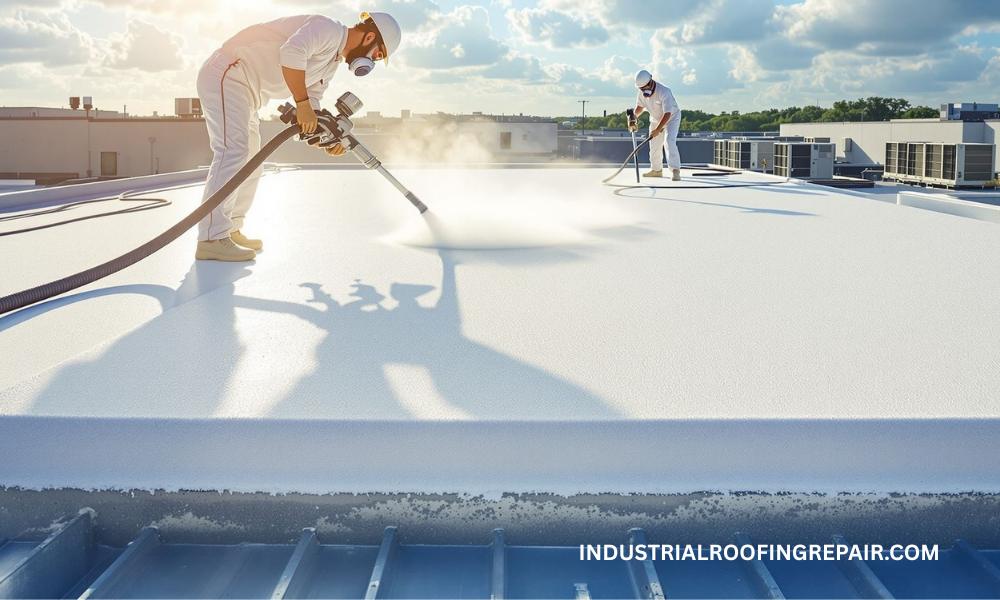
Why SPF stands out:
• Extremely high R-value (6.0+ per inch)
• Seamless waterproof insulation
• Up to 30% reduction in cooling costs
• Can be topped with a reflective elastomeric coating for extra savings
SPF is ideal for commercial and flat-roof buildings. Bonus: Many SPF systems qualify for federal energy-efficiency tax credits.
4. Metal Roofs with Reflective Finishes
Modern metal roofs are both stylish and sustainable. When coated with high-reflectance finishes, they can reflect up to 70% of solar energy — reducing indoor heat and energy costs.
Advantages: unmatched durability, recyclability, and excellent performance in Houston’s high heat and storm conditions. Combined with good attic insulation, a reflective metal roof can cut cooling energy use by 15–20% per year.
Comparing Energy-Efficient Roofing Options
| Roofing Type | Reflectivity | Insulation Value | Ideal For | Average Savings |
|---|---|---|---|---|
| Cool Roof | ★★★★☆ | ★★☆☆☆ | Residential & commercial | 15–20% |
| Elastomeric Coating | ★★★★☆ | ★★★☆☆ | Flat or metal roofs | 10–25% |
| SPF Roofing | ★★★★★ | ★★★★★ | Commercial & flat roofs | 25–30% |
| Metal Roof | ★★★☆☆ | ★★★★☆ | Residential & industrial | 15–20% |
Key Insights and Research
U.S. Department of Energy: Cool roofs can reduce cooling energy use by 10–15%, depending on insulation and design.
EPA ENERGY STAR® Program: Reflective roofing can lower surface temperatures by up to 50°F.
Houston Advanced Research Center (HARC): SPF and reflective coatings can reduce peak energy demand during summer by more than 25%.
These studies confirm what Houston homeowners already know: when your roof stays cooler, your energy bills follow suit.
Expert Quotes
“For Houston’s extreme heat, investing in a reflective or insulated roofing system is one of the smartest upgrades homeowners can make.” — Dr. Elena Cruz, Energy Systems Engineer
“Elastomeric coatings can transform an aging roof into an energy-saving surface with minimal disruption.” — Michael Torres, Houston Roofing Contractor
Case Study: Houston Office Building Cuts Energy Bills 28%
A midtown commercial property in Houston was struggling with high energy costs and frequent leaks. The owner chose an SPF retrofit topped with a reflective elastomeric coating.
Results after one year:
• 28% drop in cooling costs
• Noticeable indoor comfort improvements
• Minimal maintenance required
• Payback in just 3.5 years thanks to energy and repair savings
This real-world case shows how combining SPF with coatings creates both short-term comfort and long-term ROI.
Cost vs. ROI of Energy-Efficient Roofs
| Roofing Type | Installation Cost (per sq. ft.) | Average ROI Timeline | Notes |
|---|---|---|---|
| Cool Roof | $4–$8 | 3–5 years | Best for residential retrofits |
| Elastomeric Coating | $2–$4 | 2–4 years | Ideal for existing flat or metal roofs |
| SPF Roofing | $5–$7 | 3–6 years | High insulation and waterproofing |
| Metal Roof | $8–$12 | 6–10 years | Long-term durability and recyclability |
Check with CenterPoint Energy for local energy-efficiency rebates, and explore federal tax credits for ENERGY STAR®-qualified roofing and insulation products.
Frequently Asked Questions (FAQs)
Q1: How long does an energy-efficient roof last in Houston?
Depending on the material and upkeep, energy-efficient roofs can last 20–40 years. SPF and metal systems often exceed 30 years with routine inspections.
Q2: Are energy-efficient roofs good for humid climates?
Yes. Reflective coatings and SPF insulation perform exceptionally well in Houston’s humidity, helping prevent moisture intrusion and heat buildup.
Q3: Can I retrofit my existing roof for energy efficiency?
Absolutely. Elastomeric coatings and SPF overlays can be applied over existing surfaces — a fast, affordable retrofit option.
Q4: Do energy-efficient roofs qualify for tax credits or rebates?
Many ENERGY STAR®-rated products and high-R-value systems qualify for federal, state, or utility incentives. Check with your roofer or energy provider for eligibility details.
Conclusion
In Houston’s relentless heat, energy-efficient roofing isn’t just an upgrade — it’s a smart investment in comfort, cost savings, and sustainability. Whether you choose a cool roof for its simplicity, an elastomeric coating for quick results, or an SPF system for maximum performance, the payoff is clear:
• Lower energy bills
• Improved indoor comfort
• Longer roof lifespan
• Smaller environmental footprint
By upgrading your roof now, you’ll stay cooler, save money, and make your home or business more resilient to Houston’s extreme weather for years to come.
Next Steps
• Schedule a professional roof energy audit.
• Compare cool roof, SPF, and coating options.
• Apply for ENERGY STAR® and CenterPoint Energy rebates.
• Plan upgrades before summer heat peaks.
• Maintain your system annually for best results.
With the right system in place, your roof won’t just protect your home — it will actively lower your energy bills and help you stay comfortable all year long.
Beat the Houston Heat Year-Round.
- Identify the leak source quickly with expert tools and inspection tips
- Learn how to assess damage and prevent mold growth effectively
- Step-by-step recovery: from drying out to full structural repairs
- Proven strategies to stop future leaks before they start
- Insurance claim tips to help you recover your costs
Contact a Certified Houston Roofing Expert to Assess Your Roof’s Efficiency and Discover Rebate-Eligible Options for Your Home or Business.